We are extremely pleased to announce that Dresser & Associates has joined Net@Work, one of the most respected Sage Software Partners in North America and an award-winning end-to-end technology solutions provider. You will see very little change relative to your Sage Software support, really just a name change.

Compliance Whitepapers

Government compliance can be cryptic, but it's an essential part of the human resources process. Learn about how recent changes to compliance laws and how human resources software can ensure that your business adheres to workplace regulations.
The Choice Between Compliance Risk and Compliance Confidence Lies in HR Management Systems
The choice between compliance risk and compliance confidence lies in HR management systems

Avoid costly fines: Ten Compliance Mandates You Can't Afford to Ignore
Managing employer compliance can be a tedious task, but it's a highly visible, important way that the human resources department minimizes risk for the business and keeps the workforce running smoothly.
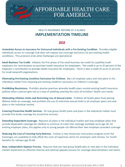
Health Insurance Reform Implementation Timeline
Health Insurance Reform At A Glance details for Implementation Timeline.
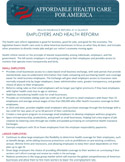
Health Insurance Employers and Health Reform
Health Insurance Reform At A Glance details for Employers and Health Reform.
Healthcare Reform Handbook
Keeping you compliant 2012 & beyond. Whitepaper supplied by Stahl & Associates Insurance.
Social Networking Reference Guide
A guide for managing your company's Social Media networking profiles on Facebook, LinkedIn and Twitter.
The Employee's Guide to The Family and Medical Leave Act
When you or a loved one experiences a serius health condition that requires you to take time off from work, the stress from worrying about keeping your job may add to an already difficult situation. The Family and Medical Leave Act (FMLA) may be able to help. Whether you are unable to work because of your own serious health condition, or because you need to care for your parent, spouse, or child with a serious health condition, the FMLA provides unpaid, job-protected leave. Leave may be taken all at once, or may be taken intermittently as the medical condition requires.
Cost-Effective Compliance What it Consists of and How to Achieve It
Sarbanes-Oxley™. Also known as "SOX". Two names that appeared within the last decade and now typically evoke a reaction among executives and IT professionals alike that usually includes much head-shaking and eye-rolling.
Avoiding Costly Fines: A 2012 Guide to Compliance Mandates
For more than twenty years, Sage has been a leader in the development of Human Resource Management Systems (HRMS) software. Midsized businesses nationwide have implemented our popular Sage HRMS solutions. From those experiences, we've learned that compliance is one of the top challenges facing any human resources department. It can be difficult to stay on top of all of the state and federal workforce laws, regulations and reporting requirements.
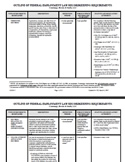
Outline of Federal Employment Law Recordkeeping Requirements
Outline of federal employment law recordkeeping requirements including: Personal Records, Records relating to employment tests, employment opportunities, Online/Internet application records, Apprentice programs, Payroll records, Time cards and schedules, Wage differential, General business records, Minor employees, Federal contractors & subcontractors of federal service contracts, Government reports, Misc. documents including agreements, contracts, certificates, benefits, Affirmative action employers, Family and medical leave act records, Immigration records, Records of self-identifying veterans and individuals with disabilities, Employee benefit records, and more.
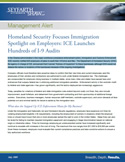
Homeland Security Focuses Immigration Spotlight on Employers: ICE Launches Hundreds of I-9 Audits
In the Obama administration's first major workforce-compliance enforcement action, Immigration and Customs Enforcement (ICE) recently notified 625 employers of plans to audit their I-9 forms and files. The Department of Homeland Security (DHS), the agency in charge of ICE, announced that it served "Notices of Inspection" to these businesses…
Sage HRMS LearningAction Compliance Training
The U.S. Supreme Court released two key decisions in June of 1998. As a result of these decisions, a company can dramatically reduce the likelihood of liability through an affirmative defense if it can show, by a preponderance of the evidence, that it (a) exercised reasonable care to prevent and correct promptly any sexually harassing behavior, and (b) that the plaintiff employee unreasonably failed to take advantage of any preventative or corrective opportunities provided by the employer. (Note that this defense is available whenever the employee has not suffered tangible employment action as a result of the alleged harassment -- e.g., been fired or denied a promotion.)
What is the Sarbanes-Oxley (SOX) Act of 2002?
Following the bankruptcy of Enron in 2001, Congress responded to heightened public concern about corporate integrity and accounting firm irregularities by passing the Sarbanes-Oxley Act of 2002 on July 30, 2002. The law's provisions are generally intended to (1)establish greater independence between public accounting firms and their audit clients; (2) remove incentives for management misrepresentation of the corporation's financial condition; (3) provide sanctions for corporate-accounting firm misconduct; and (4) establish oversight of the accounting practice…
Sarbanes-Oxley Compliance White Paper
In 2002, Congress passed new regulations designed to improve corporate governance of public corporations and reduce fraudulent corporate financial reporting. The U.S. Public Company Accounting Reform and Investor Protection Act of 2002, commonly referred to as the Sarbanes-Oxley Act, intends to rebuild investor confidence in public corporations after a wave of high publicity corporate accounting scandals that began with the Enron crisis…
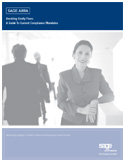
Avoiding Costly Fines: A Guide to Current Compliance Mandates
What every manager in a small to mid-sized business needs to know. View all current compliance mandates.
If you have any questions or to learn more, please contact us.